





Which battery types work best with off grid inverters?
- Understanding Off-Grid Inverters and Battery Compatibility
- 1. What are the primary battery types compatible with off-grid inverters?
- 2. How do I ensure battery and inverter compatibility?
- 3. What are the advantages of using Lithium-Ion batteries with off-grid inverters?
- 4. Are there specific considerations when using Lithium-Ion batteries with off-grid inverters?
- 5. How do Lead-Acid batteries compare to Lithium-Ion batteries for off-grid systems?
- 6. What are the environmental considerations when choosing a battery type?
- 7. How do Nickel-Cadmium (NiCd) and Nickel-Metal Hydride (NiMH) batteries perform in off-grid systems?
- 8. What are the key factors to consider when selecting a battery for an off-grid inverter?
- Conclusion: Why Choose Congsin for Your Off-Grid Power Needs?
Understanding Off-Grid Inverters and Battery Compatibility
Off-grid inverters are essential components in standalone power systems, converting direct current (DC) from batteries into alternating current (AC) for household appliances. Selecting the appropriate battery type is crucial for system efficiency, longevity, and performance. Below, we address common questions to guide your decision-making process.
1. What are the primary battery types compatible with off-grid inverters?
Off-grid systems typically utilize the following battery types:
Lead-Acid Batteries: Traditional and cost-effective, available in flooded, sealed, and gel variants. They require regular maintenance and have a shorter lifespan compared to newer technologies.
Lithium-Ion Batteries: Known for high energy density, longer lifespan, and low maintenance. They are more expensive upfront but offer better performance and longevity.
Nickel-Cadmium (NiCd) Batteries: Durable and perform well in extreme temperatures but are less common due to higher costs and environmental concerns.
Nickel-Metal Hydride (NiMH) Batteries: Offer higher energy density than NiCd and are more environmentally friendly, suitable for medium-power applications.
2. How do I ensure battery and inverter compatibility?
Ensuring compatibility involves:
Voltage Matching: Align the battery bank voltage with the inverter's input requirement (e.g., 12V, 24V, 48V).
Communication Protocols: Verify that the battery's Battery Management System (BMS) and the inverter support the same communication protocols (e.g., CAN, RS485) for efficient operation.
Manufacturer Guidelines: Consult compatibility lists provided by manufacturers to confirm supported combinations.
3. What are the advantages of using Lithium-Ion batteries with off-grid inverters?
Lithium-Ion batteries offer several benefits:
High Energy Density: Allows for a more compact and lightweight battery bank.
Longer Lifespan: Typically exceed 2000 charge-discharge cycles, reducing replacement frequency.
Low Maintenance: Requires minimal upkeep compared to lead-acid batteries.
4. Are there specific considerations when using Lithium-Ion batteries with off-grid inverters?
Yes, consider the following:
BMS Requirements: Ensure the inverter supports the BMS communication protocol of the battery.
Charging Profiles: Verify that the inverter's charging settings are compatible with the battery's specifications.
Cost vs. Benefit: While more expensive upfront, the long-term benefits of Lithium-Ion batteries often justify the investment.
5. How do Lead-Acid batteries compare to Lithium-Ion batteries for off-grid systems?
Cost: Lead-Acid batteries are less expensive initially but have a shorter lifespan and higher maintenance costs.
Maintenance: Lead-Acid batteries require regular maintenance, including electrolyte checks and ventilation, whereas Lithium-Ion batteries are maintenance-free.
Performance: Lithium-Ion batteries offer higher efficiency and deeper discharge capabilities, leading to better overall performance.
6. What are the environmental considerations when choosing a battery type?
Lead-Acid Batteries: Contain lead and sulfuric acid, posing environmental hazards if not recycled properly.
Lithium-Ion Batteries: Generally considered more environmentally friendly, especially Lithium Iron Phosphate (LiFePO4) batteries, which are non-toxic and have a lower environmental impact.
7. How do Nickel-Cadmium (NiCd) and Nickel-Metal Hydride (NiMH) batteries perform in off-grid systems?
NiCd Batteries: Offer durability and perform well in extreme temperatures but are less common due to higher costs and environmental concerns.
NiMH Batteries: Provide higher energy density than NiCd and are more environmentally friendly, suitable for medium-power applications.
8. What are the key factors to consider when selecting a battery for an off-grid inverter?
Energy Requirements: Assess your power needs to determine the appropriate battery capacity.
Budget: Consider both initial costs and long-term maintenance expenses.
System Compatibility: Ensure the battery and inverter are compatible in terms of voltage, communication protocols, and charging profiles.
Environmental Impact: Choose batteries with minimal environmental impact and consider recycling options.
Conclusion: Why Choose Congsin for Your Off-Grid Power Needs?
Congsin offers a range of high-quality off-grid inverters and compatible batteries designed for optimal performance and longevity. Our products are engineered to meet diverse energy requirements, ensuring reliability and efficiency in off-grid applications. With a commitment to sustainability and customer satisfaction, Congsin is your trusted partner in building efficient and eco-friendly off-grid power systems.


Pure Sine Wave Inverters
Does it have a charging (UPS) function?
No, this model is a pure inverter without UPS function.
What is the difference between a pure sine wave inverter and a modified sine wave inverter?
Pure sine wave inverter has an output waveform close to mains power with low distortion rate (<3%), which can be safely adapted to precision devices such as computers, medical instruments, and inverter home appliances; modified sine wave inverter has a notched waveform, which easily causes device heating, malfunction or damage, and is only suitable for simple devices such as bulbs and fans.
Modified Sine Wave Inverters
How many devices can it power at the same time?
Dual universal sockets + two USB ports can power multiple devices (such as two home appliances + two mobile phones) at the same time, as long as the total power does not exceed 600W.
What capacity battery can be used with it?
It is recommended to use a 12V 100Ah-200Ah lead-acid battery or lithium battery; the larger the battery capacity, the longer the UPS power supply time (e.g., a 100Ah battery can support a 100W device to work continuously for about 10 hours).
What power appliance can this inverter run?
It has a continuous power of 800W, so it can run appliances within 800W; the peak power is 1500W, supporting the instantaneous startup of appliances within 1500W.
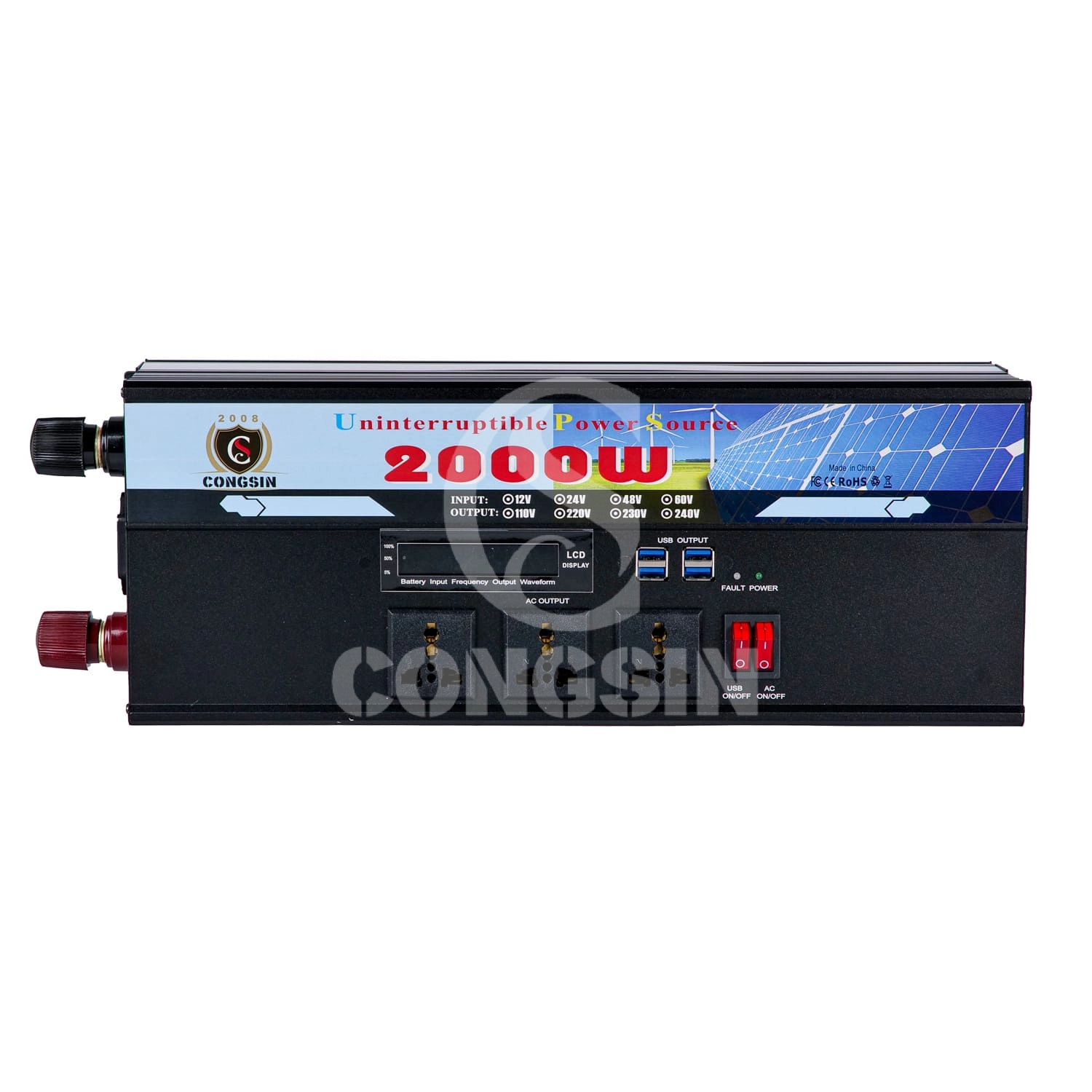
The CXUPS-2000W modified sine wave inverter combines UPS charging functionality with DC 12V input and AC 220V output. It features an LCD display, three AC outlets, four USB ports, and independent DC/AC control switches. Ideal for home, vehicle, camping, and emergency power applications.
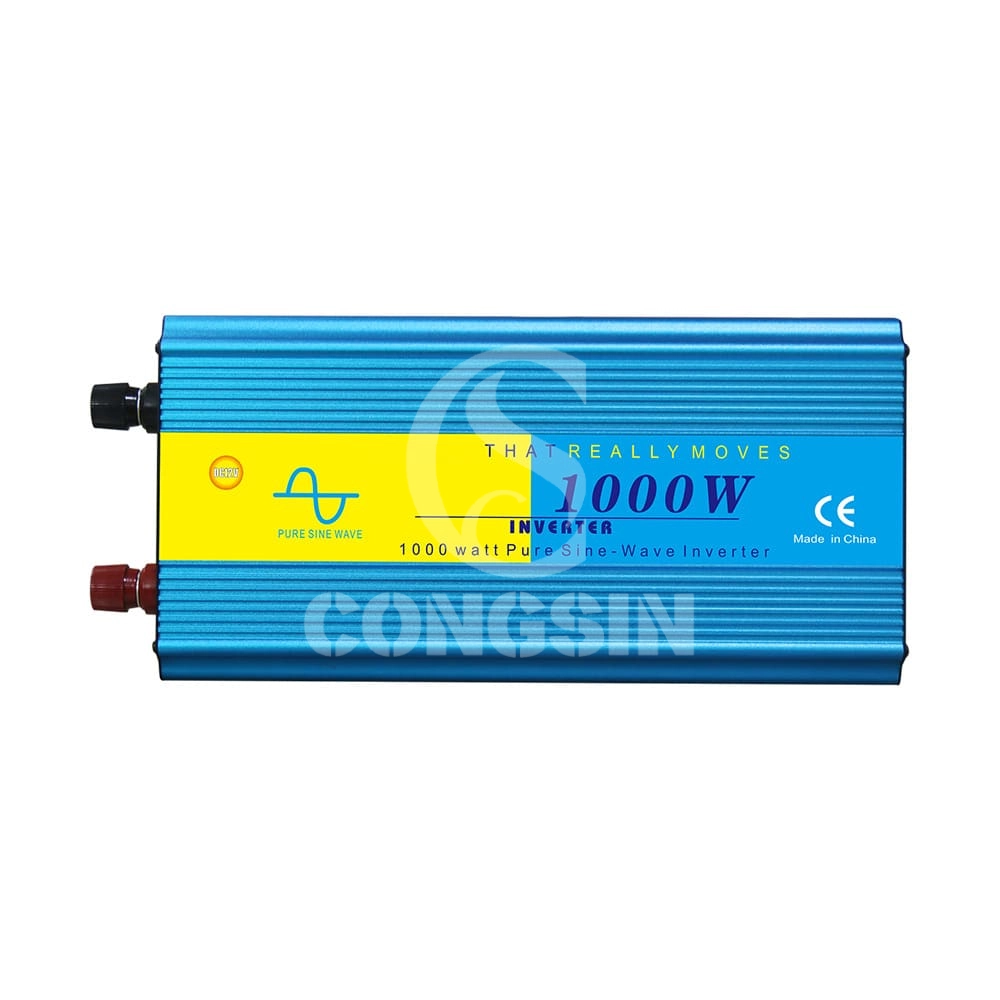
This 1000W full-power pure sine wave inverter (Model: CS1000PSW) adopts pure sine wave output technology, with a stable waveform close to mains power, which can be safely adapted to precision electronic devices such as computers, projectors, medical instruments, and inverter home appliances to avoid device damage or malfunctions. The device supports DC 12V input (compatible with 10.8V-14.5V wide voltage), continuously outputs 1000W power, and has a peak power of 2000W, meeting the power needs of most household and small commercial devices. Equipped with 2 AC universal sockets, 2 USB 2.0 fast-charging ports (18W per port), built-in five-fold protection (overload, overvoltage, undervoltage, short circuit, overtemperature), and a silent cooling fan, it balances safety and portability, suitable for home emergencies, outdoor camping, vehicle-mounted power supplies, small office and other scenarios.
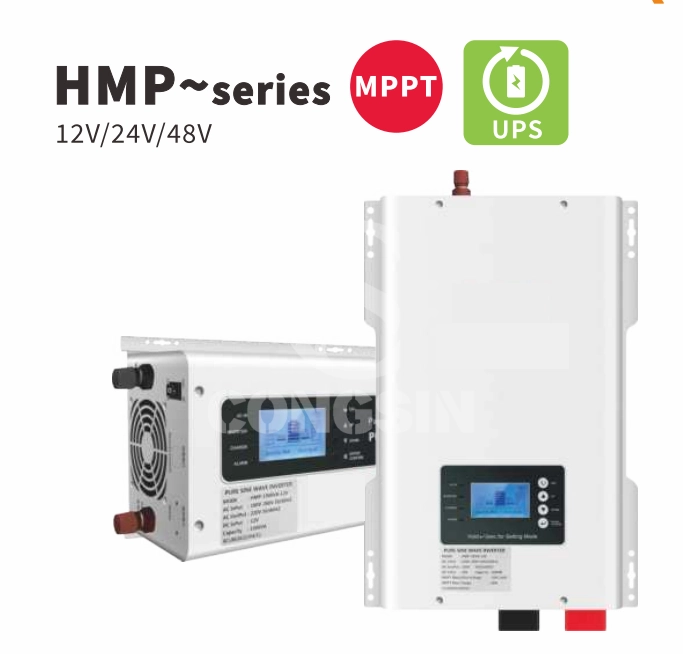
Pure sine waveform output with built-in transformer and AvR stabilizer(Specially designed to startup inductive
loads such as air conditioner,refrigerators, motors, water pumps, compressorsand laser printers)
Solar hybridinverter built-in 8oA MppT solar controller and ACcharger.
Output voltage(200V/210V/220V/230V/240V)&Output frequency(50Hz/60Hz) can be manuallyregulated at site.
Support Lead acid battery/Gel battery/lithium iron phosphate battery/ternary lithium battery/customized battery.
RS232/RS485 Communicationsportis available.
3 times start-up peak power ofresistingvoltaicimpingement, excellent loading capability.
High conversion efficiency is up to 90%.
Built-in Lithium battery activation function
PVarray Open circuit voltage 230v DC
Support 3 working modes:Mains priority,Battery priority,Pv priority
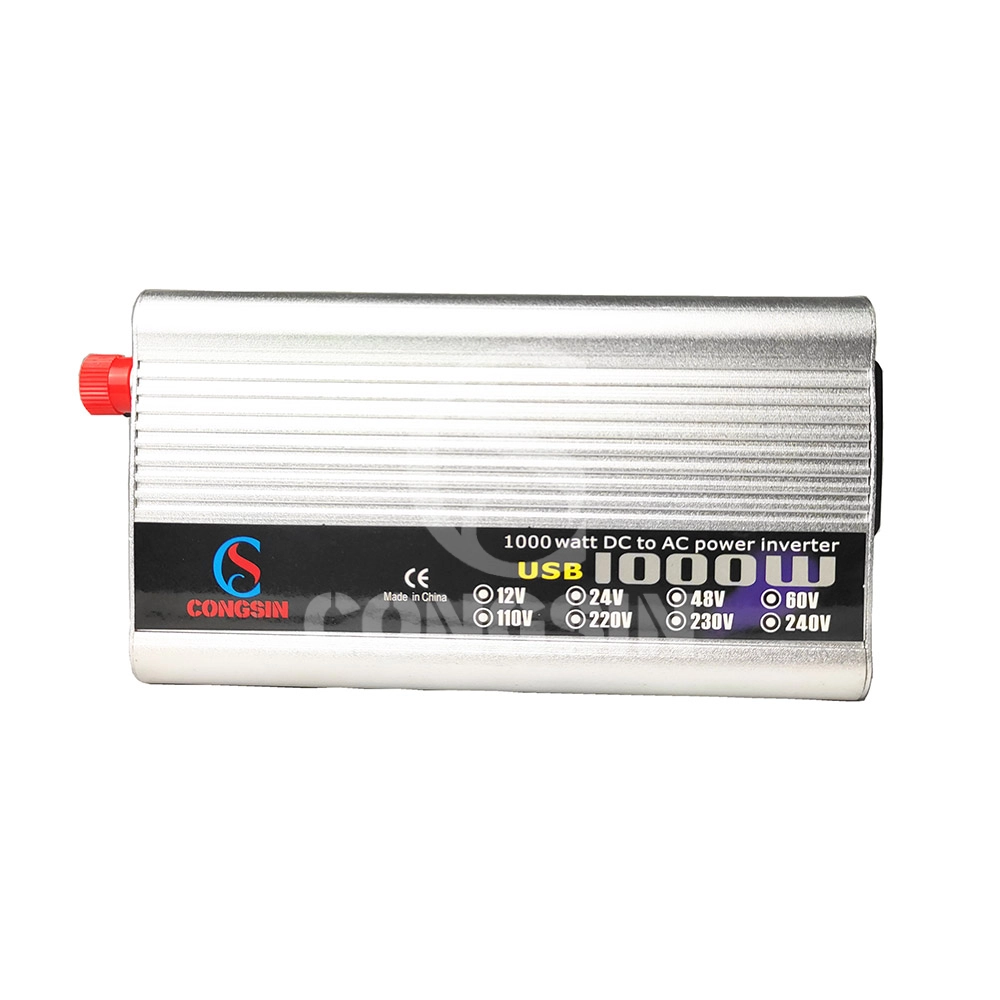
The CS1000USB Modified Sine Wave Inverter is a reliable and portable power converter designed for home and vehicle use. It converts DC 12V to AC 220V with a rated output of 600W (peak 1000W). Equipped with a USB port and universal socket, it allows users to power laptops, TVs, and tools and charge mobile devices anytime, anywhere.
Get in Touch with Our Team
You can also communicate with us directly through our online contact form. Please fill in the following information, and our team will contact you as soon as possible after receiving your message.

CONGSIN is a trusted OEM factory for power inverters, solar charge controllers, and DC converters. Reliable solutions for global B2B buyers.
 High Quality
 7/24 Service
 Guaranteed Warranty
© 2025 Congsin. All Rights Reserved.